LinkedIn Conversion Values: What an Opportunity Is Worth
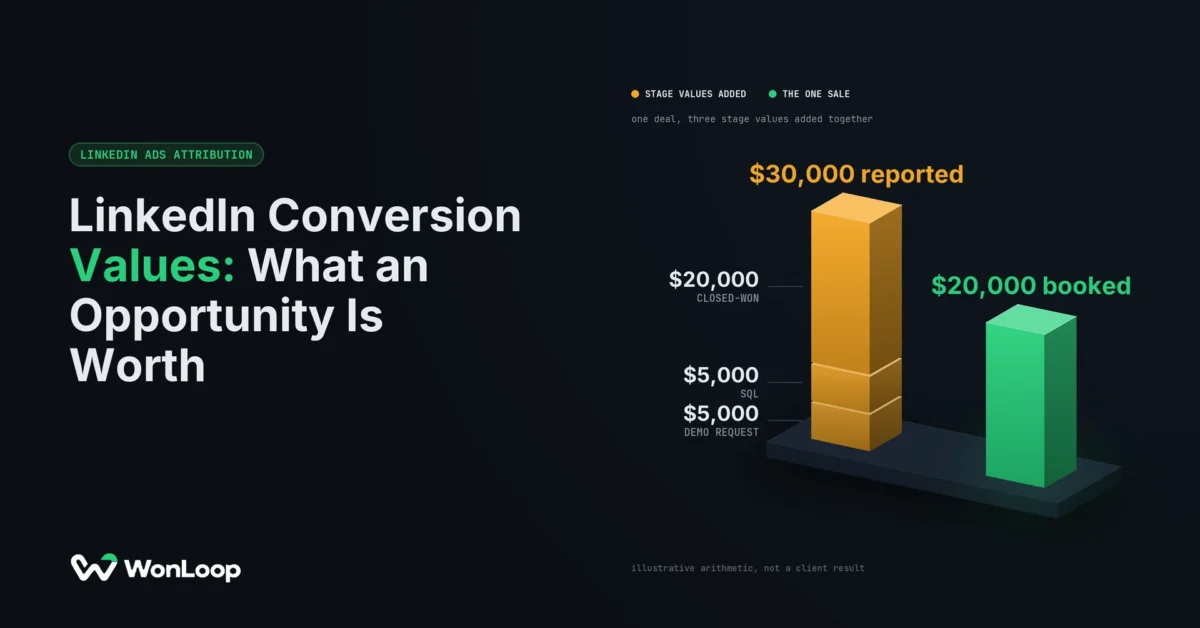
An opportunity is worth its win rate times what it books if won: 25% of $20,000 is $5,000. Keep that estimate apart from the won amount, and never add stages together.
LinkedIn ads attribution guides: Conversions API setup, offline conversion import from HubSpot or Salesforce, and wiring spend to closed-won revenue.

An opportunity is worth its win rate times what it books if won: 25% of $20,000 is $5,000. Keep that estimate apart from the won amount, and never add stages together.

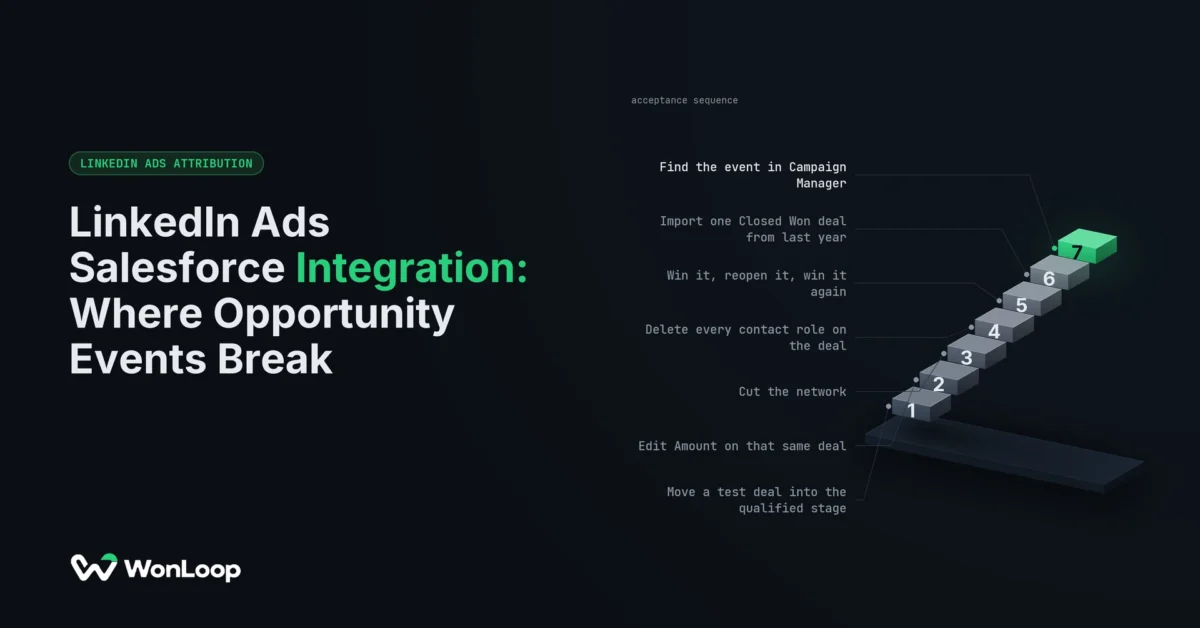
Fire on the stage change, not the stage. Build each event once, reuse its ID on retries, hold deals with no contact role, and keep reopens and imports out.

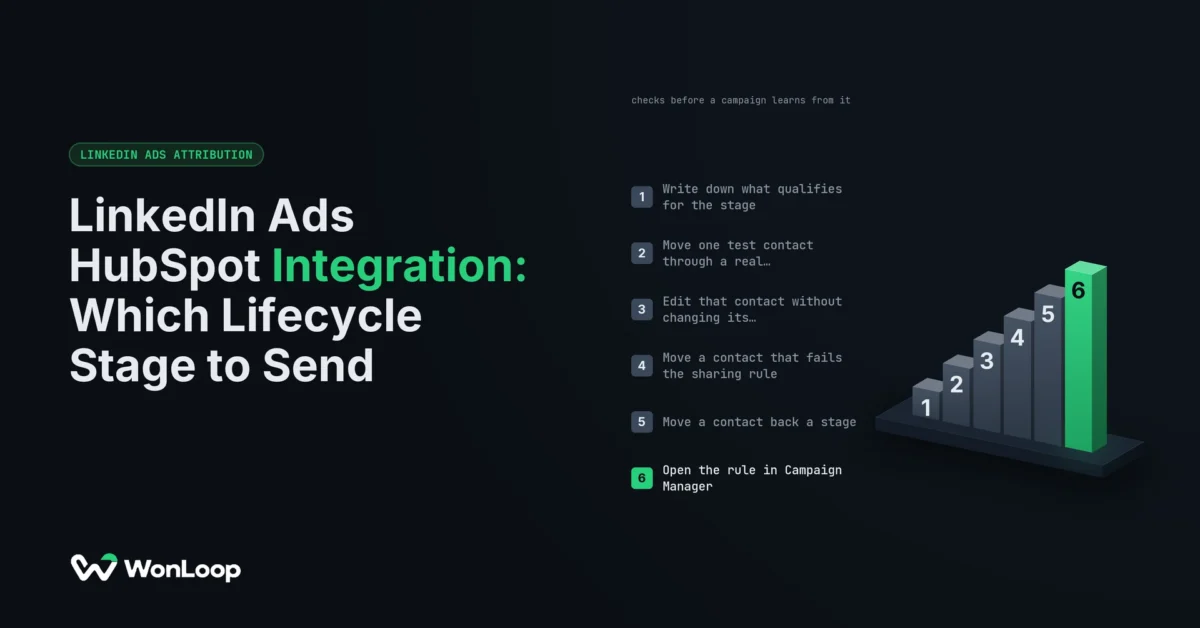
Send SQL, Opportunity and Customer for reporting, but let each campaign learn from the deepest HubSpot stage that clears about 50 events a month, usually Lead or a tight MQL.

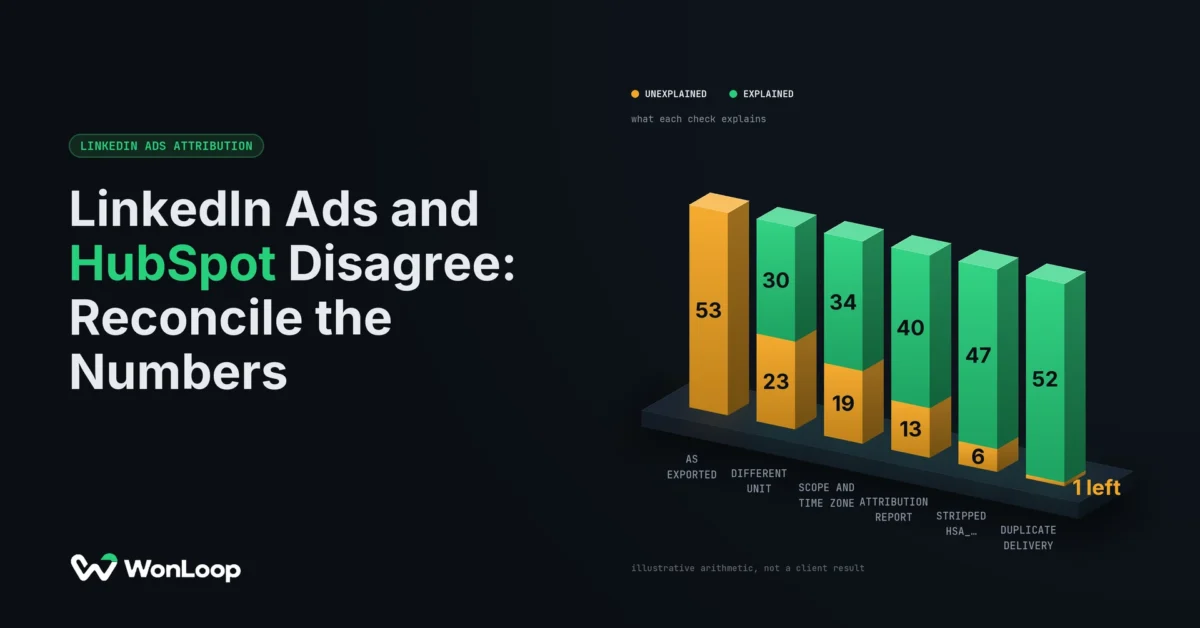
Campaign Manager counts conversion events; HubSpot counts contacts and deals under its own credit rules. Peel the gap one layer at a time before calling any of it lost.

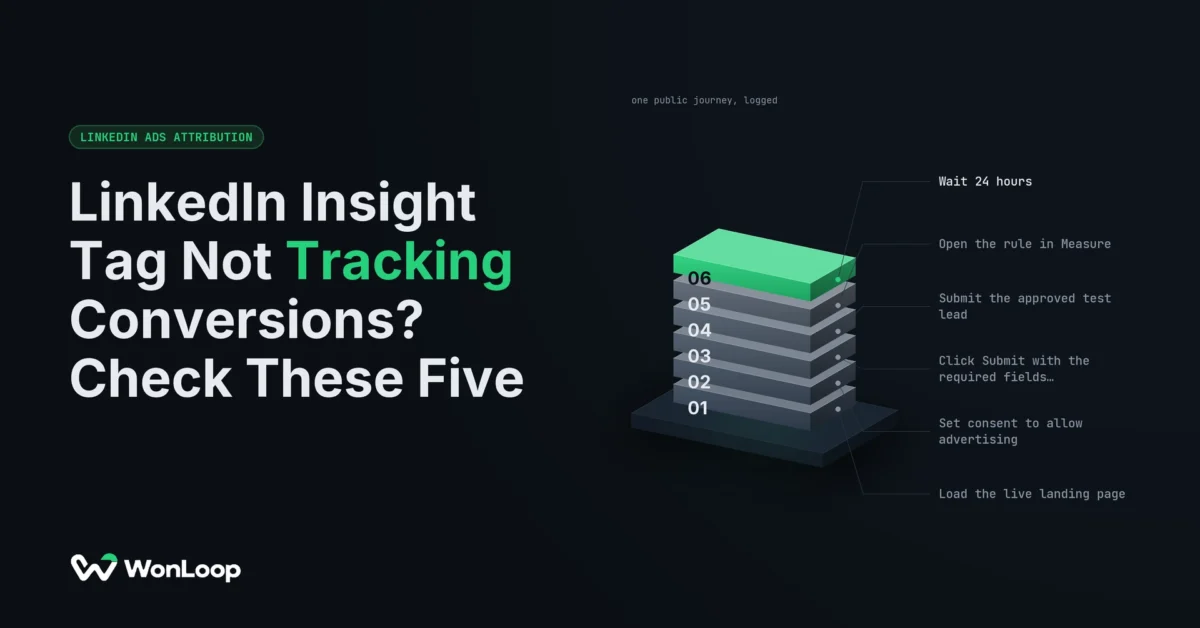
An Active tag only proves a page loaded. Check the published container, consent, a trigger that fires on success, and the rule’s campaign list, in that order.

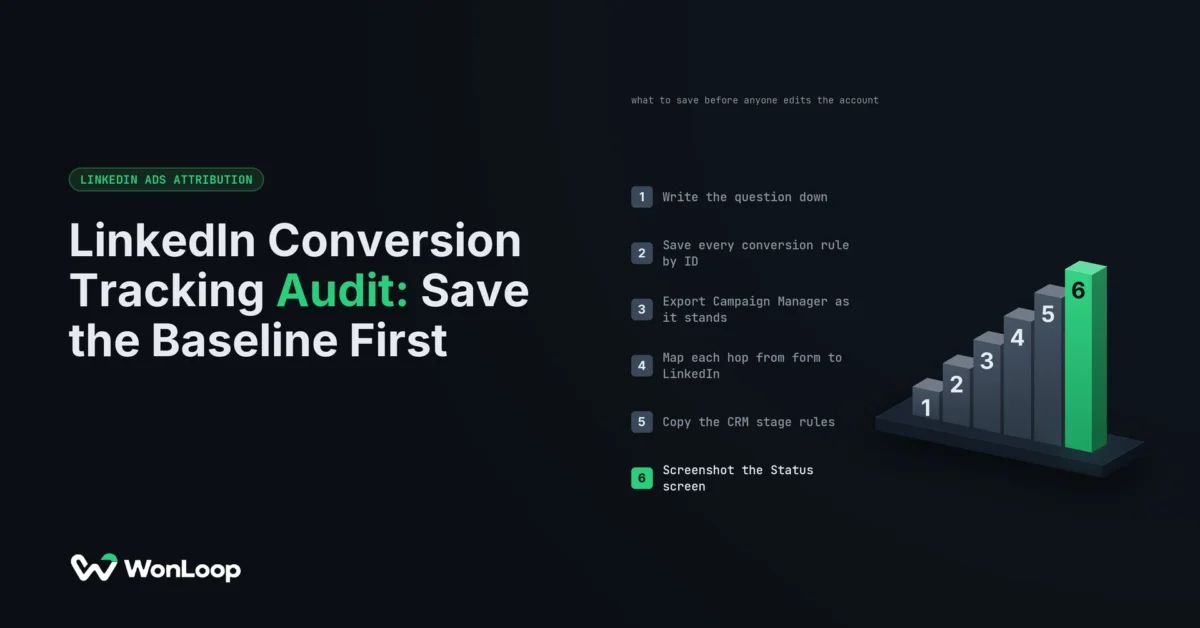
Save rule IDs, the campaigns tied to each rule, raw exports, container versions, CRM stage rules and status screens before anyone edits tracking.

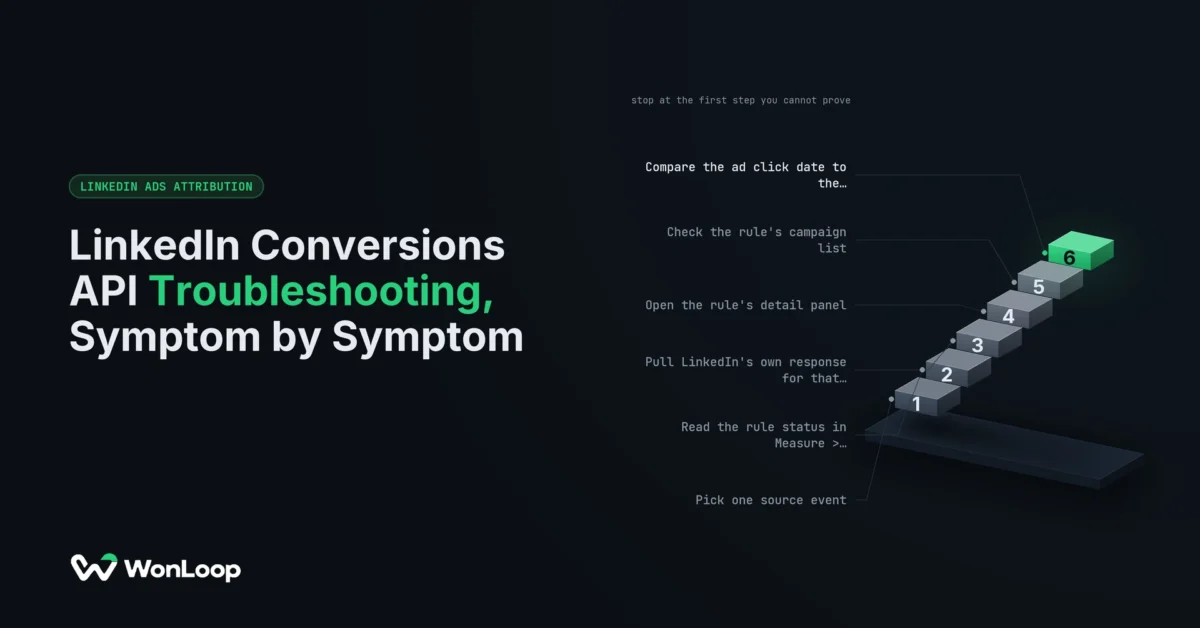
A 201 means LinkedIn took the request, not that it matched or gave credit. Check the rule status, the response, identifiers, campaign links and dedup, in that order.

Attribution access is nearly free, so listing it proves nothing. These five questions separate an agency that connected a dashboard from one that wired your CRM into LinkedIn.

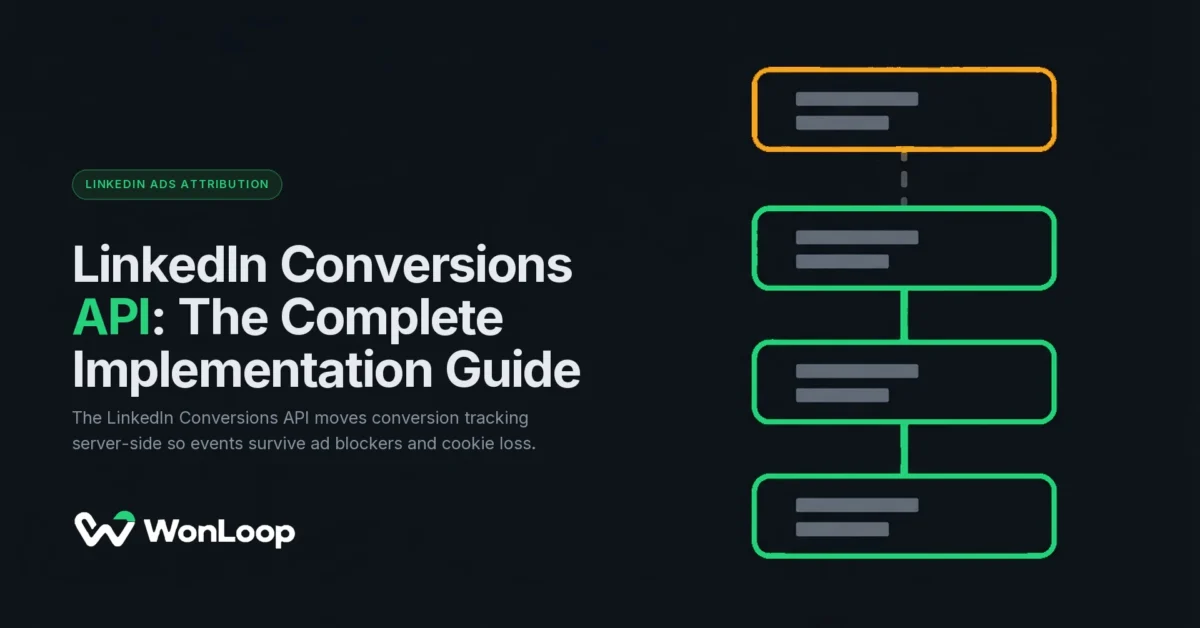
The LinkedIn Conversions API moves conversion tracking server-side so events survive ad blockers and cookie loss. This guide covers the full wiring: rules, server events, CRM import, deduplication.